
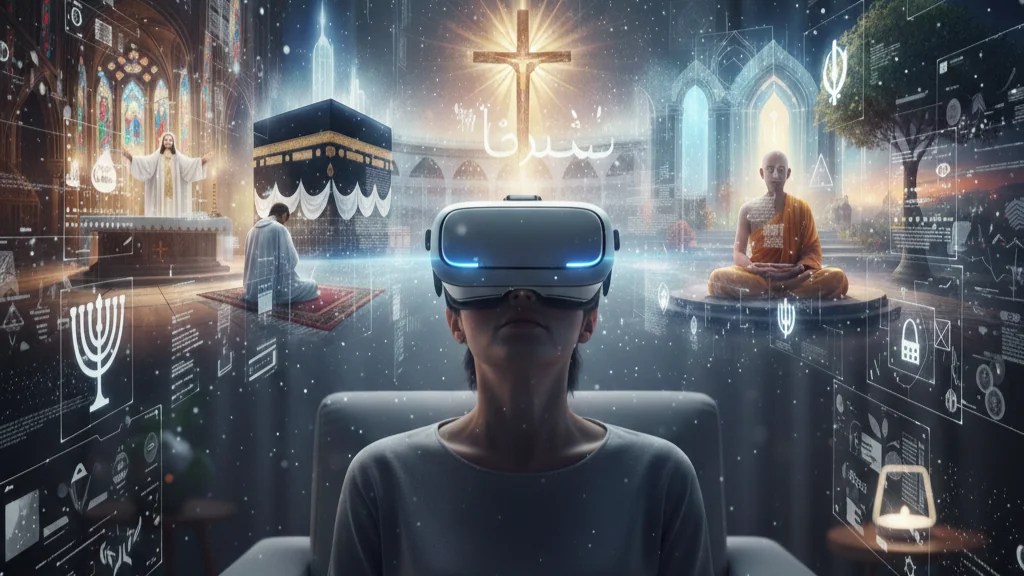
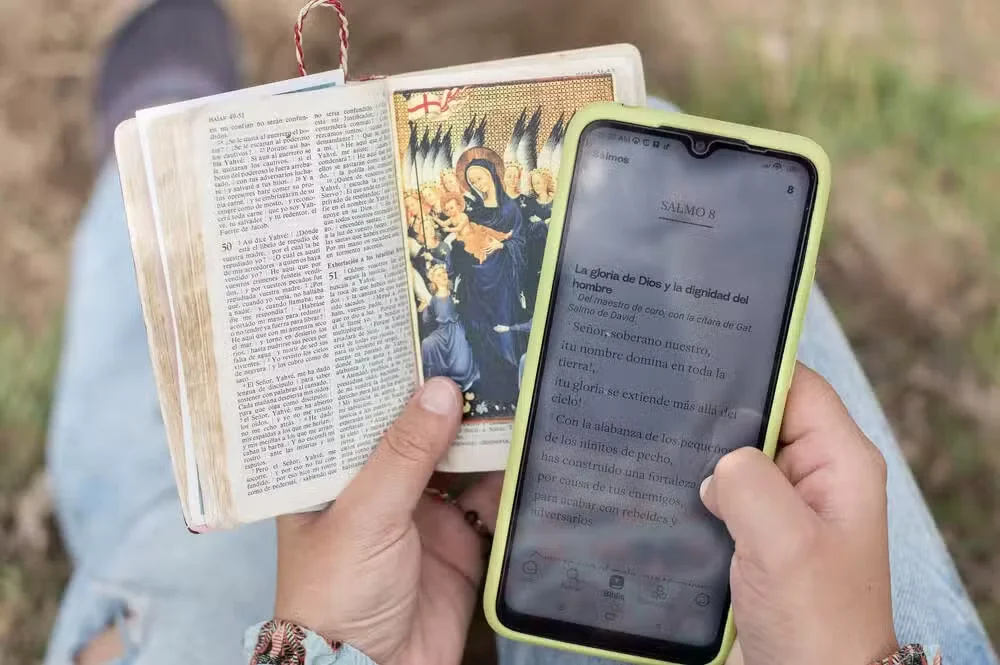
In 2026, the intersection between faith and technology has stopped being a mere curiosity to become a "digital religion" ecosystem that is redefining the global spiritual experience. What once required mandatory physical attendance at a temple can now be experienced through a smartphone, allowing millions of believers to take part in masses, worship and rites from anywhere in the world.
This transition responds not only to a need for accessibility, but to a strategy by religious institutions to connect with new generations and offer solutions to those who, for health, distance or safety reasons, cannot attend their places of worship. The truth is that the mobile device has become a personal oratory, weaving prayer into the secular routine in an unprecedented way.
Liturgy in the Age of the Bit: How does an "Altar App" work?
For an application to serve as a functional substitute for the religious ceremony, it has to replicate the immersion and solemnity of the physical rite. Current technology manages this through three fundamental pillars that seek to emulate the atmosphere of the sacred:
Real-Time Interactivity: Apps allow following events live, letting the faithful keep up with religious news and take an active part through digital liturgical responses and live prayer requests.
Guided Formation and Reflection: Advanced platforms provide audios designed for personal reflection, chants and questions that encourage a deep approach, ideal for commuting or rest, replacing the meditation time found at the temple.
Formative Realism: The use of 3D videos and panoramic photos lets the user understand the meaning of every word, sign and rite, working as a personal liturgical tutor that explains the symbolism behind each act.
The Universe of Digital Faith: Examples by Confession
Each religious tradition has found in digital marketing and software development a way to keep its community alive, adapting features to its specific rites.
1. Catholicism: Prayer and Multimedia Sacraments
The Catholic ecosystem is one of the most robust and varied, offering tools that replicate almost every aspect of parish life:
Hallow: Established as the leading app in Catholic meditation and prayer, it offers the narrated daily Mass, the guided Rosary and Spiritual Communion, a fundamental rite for those who can't physically receive communion.
iBreviary: Acts as a complete missal and breviary. It's a vital tool both for laity and priests, as it contains all the texts of the Liturgy of the Hours and rituals for various sacraments.
ConfesorGO: An innovative app that uses geolocation to help the faithful find priests available for the sacrament of confession in real time, easing the physical encounter when possible or guiding the prior preparation.
2. Islam: The Global Mosque and the Daily Duty
For the Muslim community, apps guarantee fulfilment of the pillars of the faith with absolute technological precision, regardless of time zone:
Muslim Pro: Includes a high-precision Qibla compass to locate Mecca, the Noble Qur'an with audio and translations, and Adhan (call to prayer) notifications based on the user's GPS location.
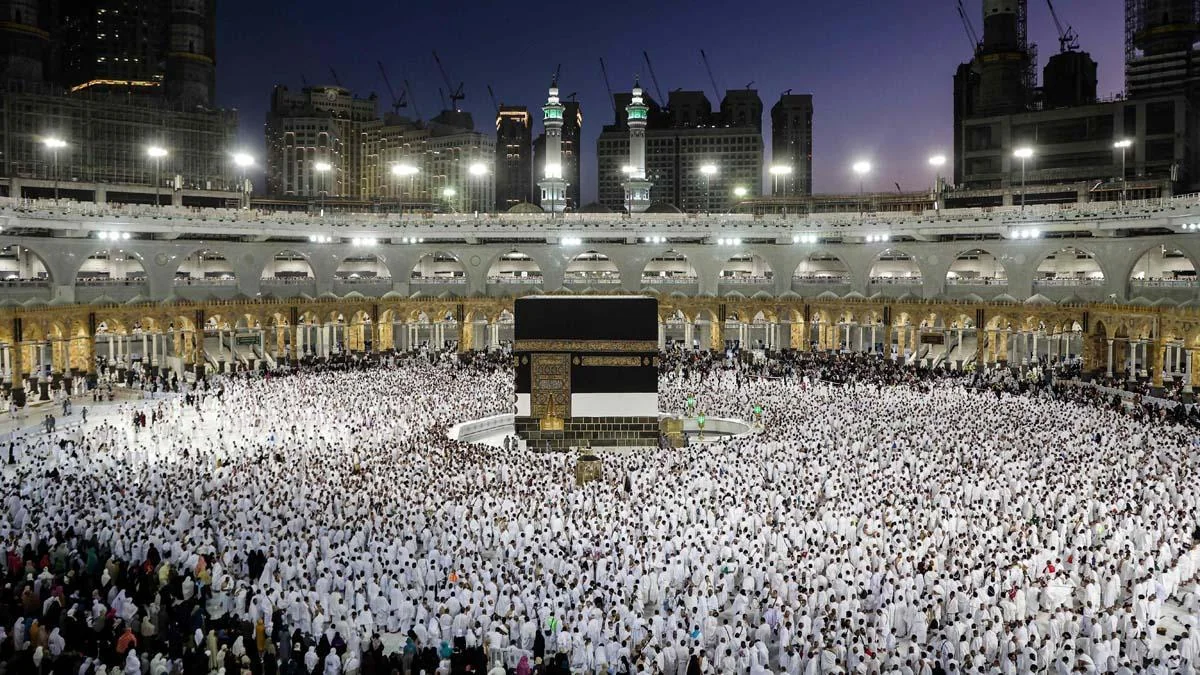
Live Broadcast: Offers direct access to video feeds from Mecca and Medina, allowing a visual and auditory connection with the most sacred sites of Islam during worship hours.
3. Judaism: The Temple of Study and Law
In Judaism, faith is lived intensely through the study of texts and the observance of ritual laws, something that technology has democratised:
Sefaria: Works as a massive digital library with 3,000 years of Jewish texts (Torah, Talmud, Mishnah). It allows you to follow daily reading calendars like the Daf Yomi, linking the faithful with the study rhythm of the global community.
Tefilot: Provides a complete collection of daily prayers (Siddur) needed for daily rites and specific celebrations, ensuring the rite remains intact in the home.
4. Buddhism and Hinduism: Vedic Rituals and Meditation
Eastern religions have found in apps a vehicle for the teaching and practice of complex rituals that previously required a physical guru:
Insight Timer: An online school of Buddhist studies where qualified monks offer ceremonies and guided meditations in real time, replacing in-person temple sessions.
Daily Puja: Works as a virtual pooja room, letting devotees perform daily rituals, prayers and offerings to Hindu deities via step-by-step guides and Vedic mantra audios.
Virtual Reality: The Leap to Digital Pilgrimage
The real frontier of religious substitution has arrived with Virtual Reality (VR). In 2026, advanced devices allow total immersion in the most sacred acts, offering a real alternative for those with financial or mobility constraints.
Immersive Pilgrimages: 360º video projects let the faithful "travel" to the Holy Sepulchre in Jerusalem or walk the Mount of Olives, recreating the spiritual emotion of a physical pilgrimage from their living-room sofa.
The Religious Metaverse: The first "Virtual Reality Churches" have appeared, where attendees take part as avatars in immersive services, interacting with other faithful in a digitally built sacred environment. This technology makes it possible to visualise complex theological concepts, such as Samsara in Buddhism or the Holy Trinity, in a tangible way.
The Business Model of Digital Faith
Behind this spiritual revolution there is a business in expansion. Many of these apps, while offering free versions, work under premium subscription models (usually between €10 and €60 a year) for access to full meditation libraries, sacred music and advanced courses.
This economic flow lets religious organisations and independent developers invest in cutting-edge technology, high-speed servers for streaming and high-quality content production. Religious marketing has known how to capitalise on the need for peace of mind and spirituality in a stressful world, positioning these apps not only as faith tools but as comprehensive wellbeing solutions.
Ethical Debate: Can an algorithm capture the sacred?
Despite the success, the debate over the "dehumanisation" of the rite persists. The truth is that, although technology can mimic sight and sound with astonishing fidelity, aspects such as physical communion, the aroma of incense or the warmth of the in-person community are out of reach of binary code.
Most religious leaders agree that these apps are invaluable technological bridges, but they should not become walls that isolate the believer. The ideal strategy is hybridisation: use the app to keep the flame of faith alive during the week or in exceptional circumstances, without abandoning the value of the physical encounter when possible.
Conclusion: Towards a Hybrid Liturgy
All in all, religious apps in 2026 have redefined the concept of "attendance". Faith is no longer measured by the bench you occupy in church, but by the quality of the interaction and the spiritual commitment you maintain through your digital channels. These tools have democratised the sacred, making millennial wisdom and the comfort of prayer available a click away.
As in other areas of modern life, faith has found in technology an ally for its survival and expansion. Pocket sanctuaries are the logical answer in a hyper-connected world that, despite its technical advance, keeps looking for answers in the transcendent.