
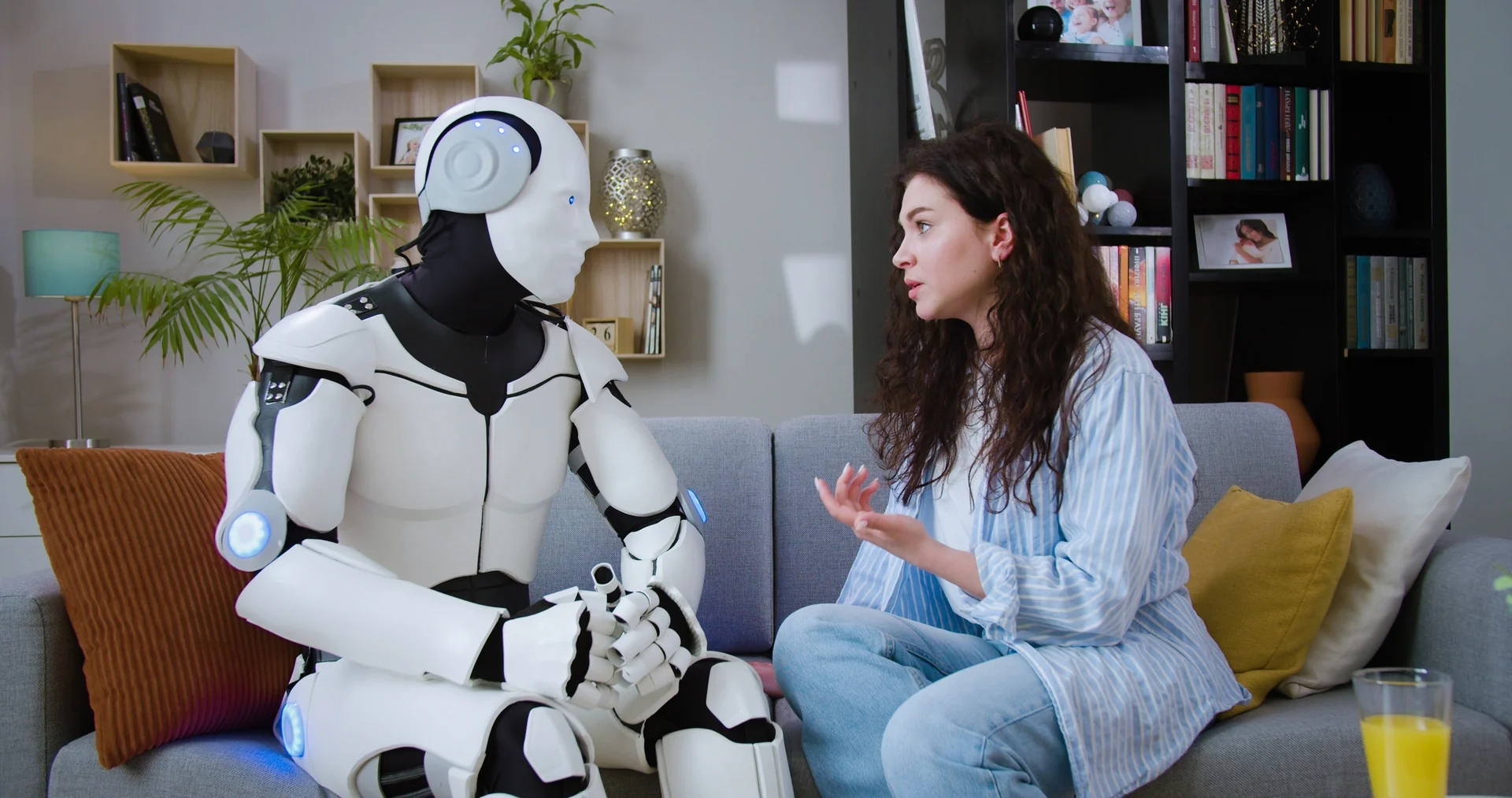
The truth is that psychology faces an unprecedented global accessibility crisis. With waiting lists in some public systems exceeding six months and high costs in private practice, a technological strategy has emerged that promises to democratise emotional wellbeing: Artificial Intelligence applied to mental health. In 2026, the "AI-therapy" business has stopped being a sci-fi curiosity to become a multi-million industry that raises an uncomfortable question: can a piece of programming code replace the depth of human empathy?
This phenomenon is not just a matter of technical convenience; it's a social marketing move that appeals to total availability and absolute anonymity. However, using conversational technology to treat complex disorders involves a series of benefits and dangers we must analyse with surgical precision before entrusting our mental balance to a server in the cloud.
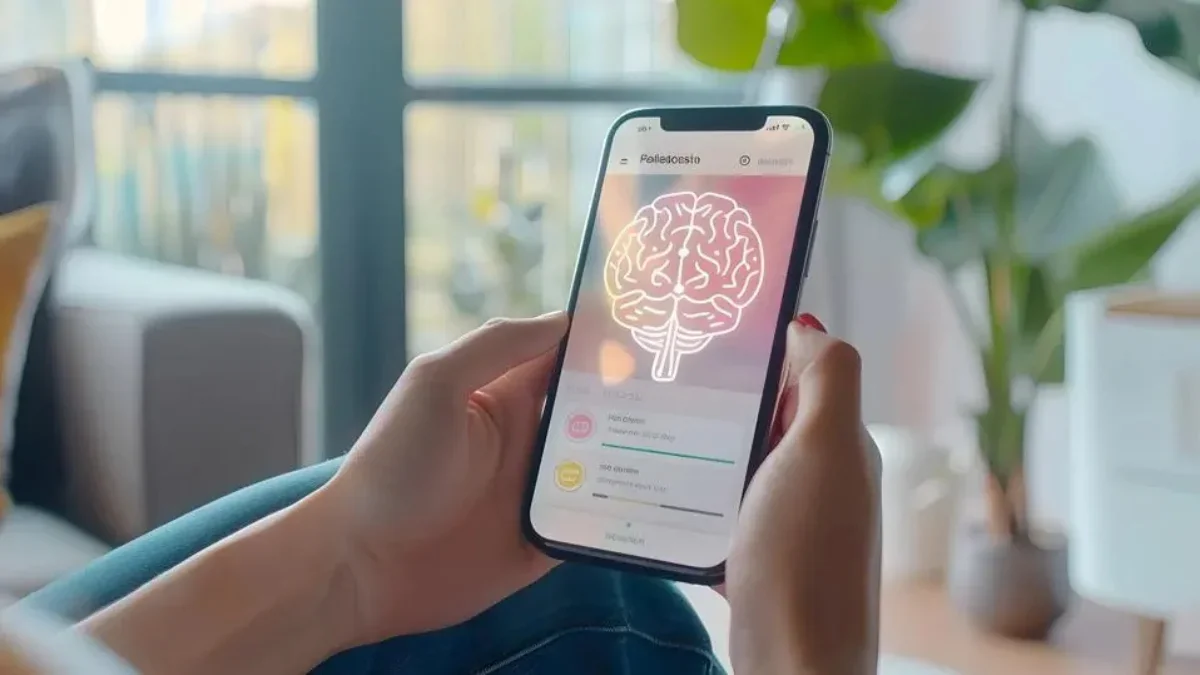
AI versus the flesh-and-blood therapist: An in-depth comparison
To understand whether we're looking at an evolution of psychology or at an insufficient substitute, it's vital to analyse the fundamental differences between the two models. The truth is that, although AI shines in logistics and immediacy, the human being remains unbeatable in deep emotional connection.
Availability versus scheduled connection
The first big difference lies in availability. While a flesh-and-blood psychologist offers weekly sessions tied to working hours and prior appointments, AI is available 24 hours a day, 7 days a week. That immediacy is a winning strategy for moments of one-off crisis, but it lacks the natural rhythm of a human relationship. The technology can always be there, but it doesn't "wait" for the patient or build a shared history outside of data logs.
Authentic empathy versus algorithmic simulation
In psychology, empathy is the engine of change. A flesh-and-blood therapist offers authentic empathy grounded in lived experience; they can be moved by the patient's story, understand the subtext of a glance or pick up the tension in the room. By contrast, AI can only offer a simulation. It uses natural-language-processing algorithms to "seem" empathetic, but it doesn't feel the other person's pain. It's a technology that imitates emotional validation based on statistical probabilities of linguistic success.
The therapeutic alliance and non-verbal language
A critical point is what clinical psychology calls the "therapeutic alliance". This human bond is, according to several studies, the factor that best predicts treatment success. A human psychologist reads non-verbal language: microexpressions, posture shifts or silences loaded with meaning. Today's AI, even if it analyses tone of voice or text, misses 80% of human communication that happens on the physical, gestural plane. The truth is that a machine can't hold the gaze of someone who is suffering, an act that is in itself already therapeutic.
Ethics, privacy and professional confidentiality
The AI-therapy business raises doubts about confidentiality. While a psychologist is bound by a strict code of ethics and professional confidentiality under healthcare legal frameworks, the data delivered to an AI sits on private companies' servers. In this environment, there's a risk that intimate information becomes a marketing asset or suffers security breaches. In flesh-and-blood therapy, privacy is a human right; in AI, it's often a clause in a terms-and-conditions contract.
Advantages: Why AI is gaining ground in wellbeing
AI's mass adoption in the field of psychology rests on pillars that traditional therapy can't cover with the same agility.
Economic accessibility: AI removes geographical and price barriers. It's a perfect entry strategy for those who have never had any contact with mental health due to lack of resources.
Reducing social stigma: Many people avoid therapy out of fear of judgement. Talking to a bot allows a brutal honesty that sometimes takes months to appear in a physical consultation, since the patient doesn't feel watched by another human being.
Predictive data analysis: Technology can detect subtle patterns in writing or device usage that flag an imminent relapse, allowing for a much faster intervention than the model of fortnightly appointments.
Critical risks: The danger of clinical "hallucination"
Despite the advances, the strategy of replacing the human with the machine has vital risks. Today's AIs can still suffer "hallucinations", giving medical or psychological advice that is contradictory or outright dangerous. In a context of severe depression or suicidal ideation, an algorithm's mistake is not an annoying technical glitch; it is negligence with potentially fatal consequences.
In addition, these applications' approach is usually purely cognitive-behavioural, because it's the school of thought easiest to program. This leaves out other branches of psychology that explore deep traumas, complex family dynamics or existential crises that can't be resolved simply by mechanically swapping one thought for another.

The Business Model: "Two-speed" psychology
Behind every wellbeing app there's a business infrastructure looking for profitability at scale. In 2026, we're seeing how big insurers are integrating these apps as a strategy to cut operational costs.
The truth is that this raises a sharp ethical debate: are we creating a "two-speed" psychology? One luxury tier for those who can afford a flesh-and-blood professional, and another automated, cold one for the more disadvantaged. These corporations' marketing sells "democratisation", but we must be vigilant that it doesn't become an excuse to dehumanise basic healthcare.
Conclusion: The future is hybrid collaboration
All in all, AI in the field of psychology is a tool with an undeniable marketing and efficiency potential, but it should never be the final destination of treatment for serious pathologies. The smartest strategy for the coming years is the hybrid model: the human psychologist leads the process, using AI technology as an assistant that monitors the patient between sessions and provides valuable data for diagnosis.
The truth is that the human mind is too complex to be reduced to a series of response algorithms. Technology gives us the map and the compass, but human presence, eye contact and the understanding of another's suffering remain the only beacons capable of guiding someone through their deepest storms. In the mental-health business, the algorithm can be an excellent co-pilot, but the heart must always remain flesh and blood.