
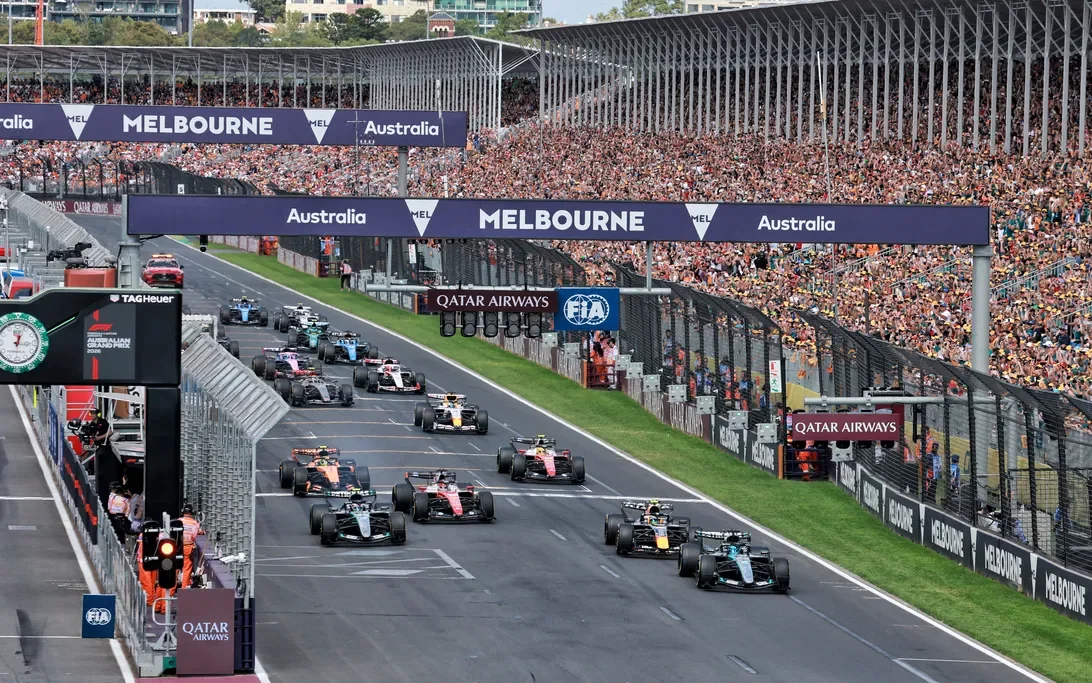
The tarmac of Albert Park, in Australia, didn't only welcome the fastest single-seaters on the planet this March 2026; it has welcomed a new technological era that changes the rules of motorsport forever. If you thought Formula 1 had reached its competitive ceiling, the 2026 season has come to prove that the "Great Circus" has just rebooted from scratch.
From the historic change in the power unit architecture to the silly season that has redrawn the grid map, we analyse in depth what to expect from this new course and how content creators are redefining sporting narrative.
The 2026 World Championship: A 24-stop marathon
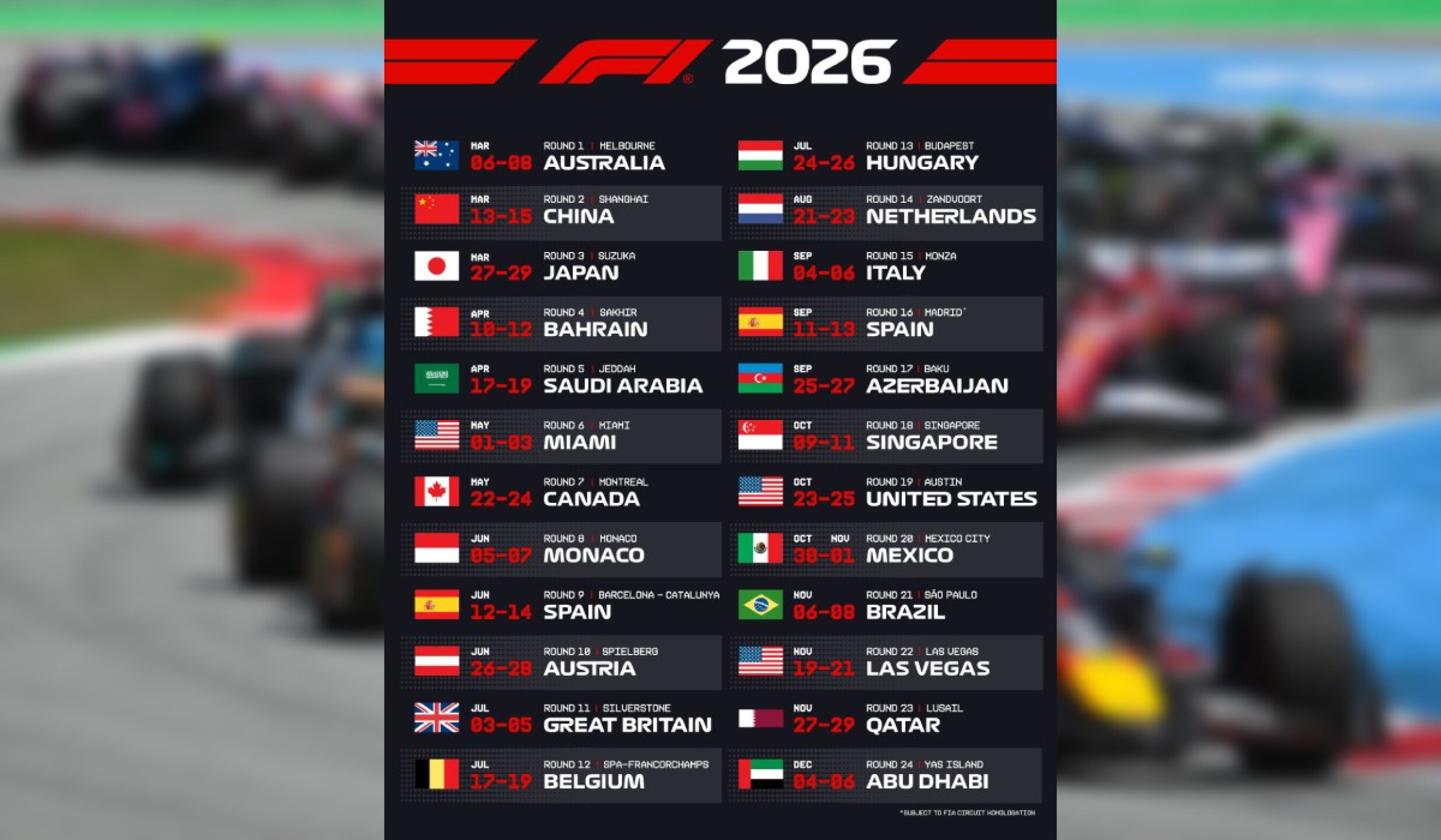
The 2026 calendar is the most ambitious in FIA history. With 24 Grands Prix confirmed, the championship has become a global event that gives no respite. The season kicks off in the Middle East, but the real battle will be fought in the development capacity of the factories.
The return of classics and American expansion
This year, the championship recovers legendary tracks with renewed tarmac, but maintains its bet on the United States with three key stops: Miami, Austin and Las Vegas. However, the media focus is on the consolidation of new-generation urban circuits and the stability of European temples such as Silverstone and Spa-Francorchamps, which have had to adapt their infrastructure to the new safety and speed demands of the 2026 single-seaters.
The Technical Revolution: Engines, aerodynamics and sustainability
If anything defines this season, it's the regulatory change to the Power Unit. Forget the hybrid engines of the last decade; 2026 is the year of extreme efficiency and massive electric deployment.
Goodbye to the MGU-H, hello to electric power
The removal of the complex MGU-H system has allowed new manufacturers such as Audi and Ford (in alliance with Red Bull Powertrains) to enter the grid. Now, the electric motor generates almost 50% of the car's total power (about 350kW). This means energy management by the driver is more critical than ever: knowing when to recover and when to deploy the extra power is the difference between pulling off an overtake and being vulnerable on the straight.
Active aerodynamics: The end of traditional DRS
The 2026 cars are slightly smaller and narrower, designed to be more agile over short distances. But the big novelty is active aerodynamics. The wings now automatically change angle: on the straights, air resistance (drag) is minimised and in the corners, support (downforce) is maximised. It's a technological dance that lets the cars follow each other much more closely without losing load due to dirty air.
100% Sustainable fuels
For the first time, F1 races with synthetic fuels that add no net carbon to the atmosphere. It's a milestone that seeks to save the internal combustion engine, proving that top-level competition is the cutting-edge laboratory for global mobility.
The starting grid: The Hamilton effect and new alliances
The season opener has left images that just two years ago would have seemed impossible.
Lewis Hamilton at Ferrari: This year, yes
Seeing Sir Lewis Hamilton dressed in red in 2025 was the biggest sporting event of the decade. His pairing with Charles Leclerc forms one of the most explosive duos in history, but at Maranello the pressure is at its highest, after the disenchantment of last season: they have one of the most advanced engines of pre-season and the experience of the seven-time champion to try to break a title drought that has lasted too long.
Lando Norris: The Champion defends his crown
All eyes in Australia have been on the single-seater with number 1 from McLaren. Lando Norris, after being crowned as the brand-new World Champion in 2025 in a nail-biting finish, starts this season with the mission of revalidating his title in a totally unknown setting. Defending the crown in the middle of a technical revolution is the ultimate test for the British driver, who is looking to consolidate Woking's dominance against the assault of the new manufacturers.
Red Bull-FORD: Total challenge
Despite losing his supremacy last season, Max Verstappen remains the main favourite for the new title, but a fresh regulatory change is the biggest challenge of his professional career. Reliability will be the factor that determines whether he can once again take the championship.
The season opener: What we saw in Australia
The opening GP has served to clear up some initial doubts. The closeness in the midfield is astonishing: between fifth and fifteenth, there are barely three-tenths in qualifying.
Technical evolution: A step forward has been seen from teams like Aston Martin and McLaren, which have brilliantly interpreted the flexibility of the new wings.
Race management: Tyre degradation remains key, but now there's also the thermal management of the new high-voltage batteries, which has forced several drivers to manage the engine map in the final laps.
The new sporting narrative: The creator as a bridge
In 2026, the way we consume Formula 1 has mutated. Fans no longer just look for the TV broadcast, but for an analytical and close experience.
The "Inside" experience
Creators such as Javi Bridge or Alex Perez have transformed sports communication, both well known in the world of football. But the same happens with F1 and its influencers: their access to the hospitalities, their simplified telemetry analyses and their ability to narrate the "behind the scenes" let the fan understand the why of every strategy. Today's audience no longer just wants to know who won, but how McLaren managed to gain two-tenths in the gear change or why Ferrari's battery is superior in traction.
Simracing: F1 in the palm of your hand
As we have analysed in the best video games for iPhone this year, EA Sports' F1 26 has reached a level of photographic realism. Thanks to the ray tracing of the A19 Pro chip, the reflections of the Sakhir lights in the cockpit are indistinguishable from reality. This allows fans to replicate races in real time, competing under the same weather and track conditions as the professional drivers, creating a direct link between the game and reality.
Fan sovereignty and community
The current industry trend is clear: the fan is at the centre. They are no longer a passive spectator. Platforms like ours, FansOrbit, allow that passion to be channelled through the "Orbits" of the most influential creators.
Here, analysis becomes conversation. Fans debate the legality of the new flat floors, compare Alonso's lines with Piastri's and consume content that bypasses the traditional press's filters to focus on what really matters: the emotion of the engine and technical precision.
Conclusion: A blank canvas
Formula 1 in 2026 is an ecosystem where no one has victory guaranteed. The learning curve with the new fuels and electric management is so steep that the grid order could change drastically between the start in Australia and the championship close in Abu Dhabi, in early December.
What is undeniable is that the connection between elite sport, cutting-edge technology and the digital community has never been so close. We're facing the most technological, greenest and most contested championship in history. The question isn't who will win the first race, but who will know how to evolve fastest in this arms race on wheels.