
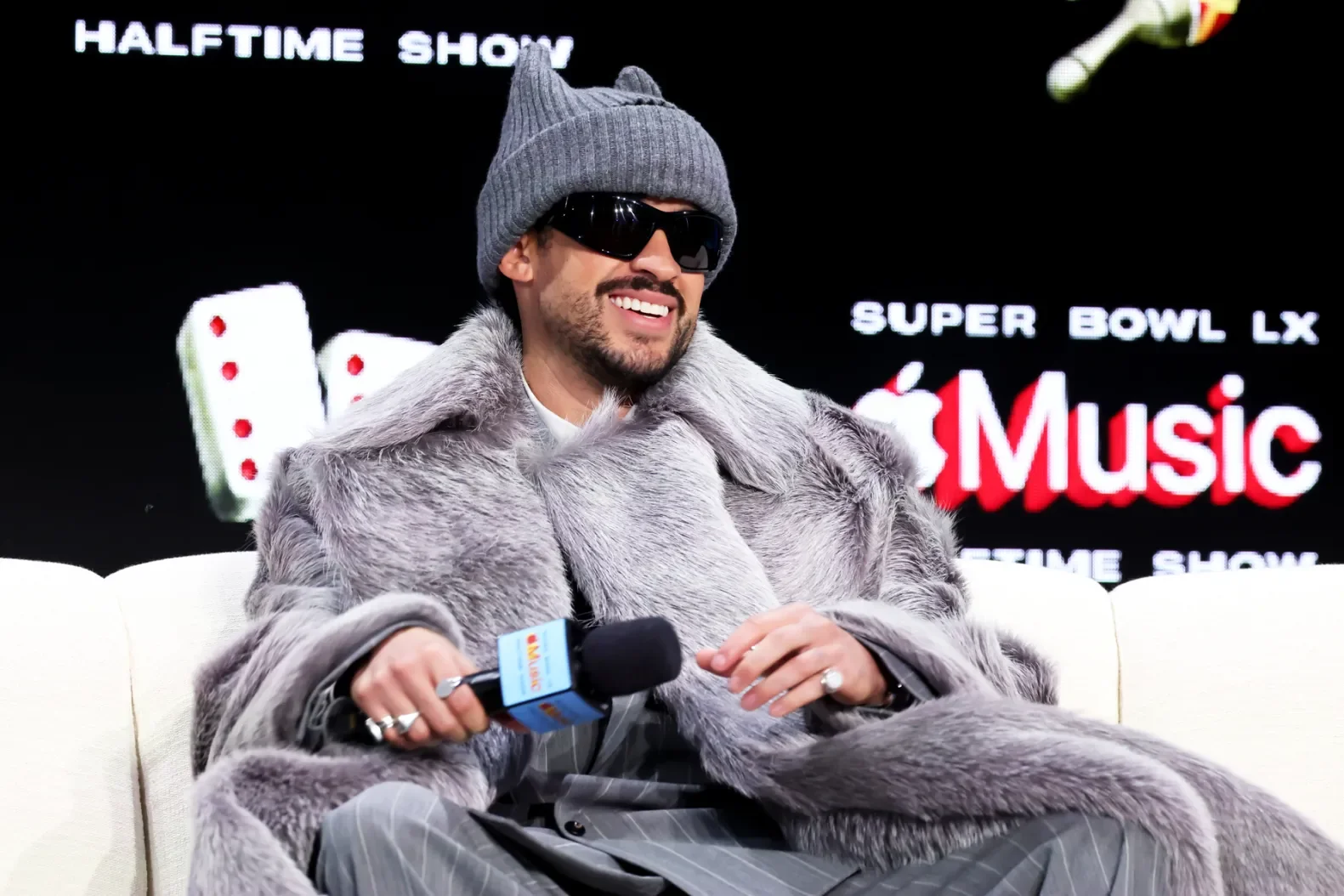
Levi's Stadium in Santa Clara, in the San Francisco Bay, will witness this Saturday, 8 February 2026, one of the most vibrant and controversial shows in NFL history. Super Bowl LXI will not only be remembered for the duel on the gridiron but for the figure of Bad Bunny, in charge of leading a half-time show that aims to fuse Latino pride with a cinematic staging, in a climate of unprecedented political tension.
The press conference: "You don't need to learn Spanish, you need to learn how to dance"
At yesterday's much-awaited Thursday press conference, held under the Apple Music umbrella, Benito Martínez Ocasio looked visibly moved and thoughtful. Far from the image of an unreachable star, the Puerto Rican admitted that nerves have been with him all week: "Last night I couldn't sleep thinking about this. I want to think it's just thirteen minutes doing what I love".

One of the standout moments was his response to the language barrier. After months of controversy over the exclusive use of Spanish, Bad Bunny delivered a message of unity: "I know I said you had four months to learn Spanish, but the truth is you don't even need to learn it. It's better if you learn how to dance". The artist insisted his main goal is for the whole world, regardless of origin, to come together in a "big party" celebrating his culture.
The most emotional moment of the afternoon came when he remembered his roots. When asked who would be in his thoughts before taking the stage, he didn't hesitate: "My mother. She believed in me before anyone else, not only in my music but that I was a good person capable of achieving great things".
The Trump controversy: Strategy versus principles
The big debate around this performance has been the singer's apparent contradiction. Bad Bunny had publicly stated he would not perform in the United States under a Donald Trump administration. However, his presence today in San Francisco has been seen by many as a surrender, while for others it's a masterful strategy of cultural infiltration.
Trump has not been a stranger to the event. The president has harshly questioned the NFL's choice, branding the artist as someone who "sows hate" and admitting — with disdain — that he "doesn't know who he is". Faced with this, Bad Bunny has opted for a pragmatic approach to the entertainment business: use the world's biggest platform (more than 120 million viewers) to validate the Latino footprint in the US, especially after winning the Album of the Year Grammy last week.
Chronicle of a disruptive show: Technology and Legacy
The performance opened with a visual technology display that transformed the field into a futuristic Puerto Rican beach. Bad Bunny revisited global hits, weaving urban-culture elements with a live orchestra that lifted trap to an epic dimension.
Heavyweight collaborations
Following the tradition of inviting other icons, Rosalía and Feid could join the stage, consolidating a "Latino block" that proves Spanish is today the lingua franca of global entertainment. Immersive sound quality and the use of coordinated drones set a new bar in live-event production.
The Olympus of legends: The weight of history
Bad Bunny wasn't only competing against the audience, but against the ghosts of performances that have defined pop culture. The Super Bowl half-time has been the stage for moments that are already part of our collective DNA, and ones the "Conejo Malo" stands against today:
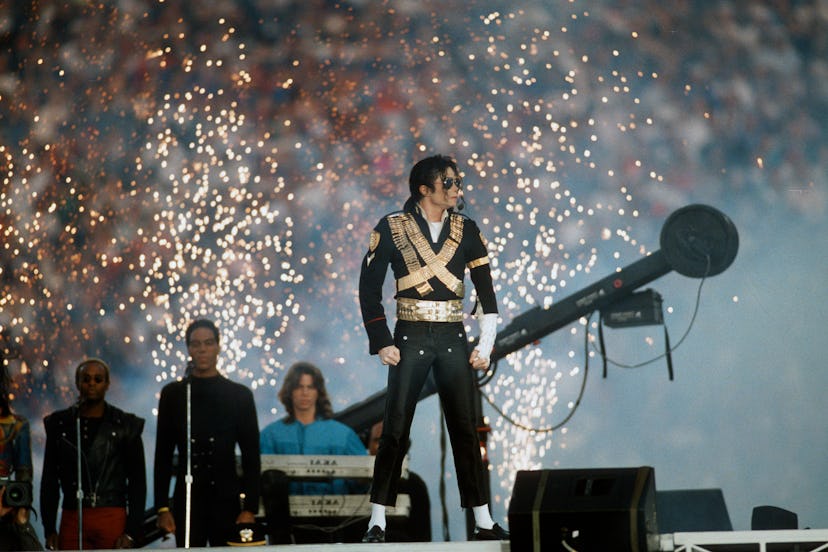
Michael Jackson (1993): The King of Pop changed the rules of the game. He was the first to prove that the Half-Time could be a massive-audience event in its own right, using the stage to deliver a world-peace message that stopped time.
Prince (2007): In a torrential downpour in Miami, Prince delivered what many consider the best performance in history. His guitar solo of "Purple Rain" as the sky fell on the stadium is, quite simply, unreachable.
Madonna (2012): The Queen of Pop brought a Roman aesthetic and a technical precision proving that the show business demands iron discipline. Her show is remembered for the perfect integration of young guests.
Coldplay, Bruno Mars and Beyoncé (2016): A burst of colour celebrating the league's 50th anniversary, combining British pop energy with the stage mastery of two of today's best performers.
Lady Gaga (2017): Her leap from the stadium roof and her vocal display without pre-recorded backing reaffirmed her status as one of the most complete artists of her generation, betting on physical and emotional power.
The impact on Marketing and Digital Business
From a business perspective, the San Francisco performance lifts Bad Bunny into an exclusive commercial category. Despite boycott attempts from conservative quarters — which even proposed alternative concerts by artists such as Kid Rock — the NFL has backed the choice based on the Puerto Rican's pulling power with Gen Z and the Hispanic community.
Technology has been key to monetising the event beyond TV. The integration of exclusive content on social media and the pre-sale of digital merchandising have generated record revenue in the hours before the game, proving that the "Bad Bunny" brand is today a first-class financial asset.
Conclusion: Principle or pragmatism?
The 2026 performance will be remembered as the moment when Latino pride definitively took over the biggest American stage without asking for permission. Bad Bunny has shown that you can stay true to an identity and, at the same time, use the system's structures to validate it. By joining the exclusive club of Jackson, Prince and Madonna, the "Conejo Malo" has closed the debate: his music isn't a fad, it's the heartbeat of the modern world.